Hand Emoji: A Playful Typeface for Unforgettable Branding
Have you ever scrolled past a social media post or a product package that just made you smile instantly? Often, that immediate connection comes down to a single, clever design choice. Imagine if your typography could do more than just convey words—what if it could convey a gesture? This is precisely the magic of the Hand Emoji font. It is not just a collection of letters; it is a visual language that replaces standard characters with expressive hand gestures. For designers, entrepreneurs, and content creators looking to break away from the monotony of standard sans serif and serif fonts, this typeface offers a bridge between text and illustration.
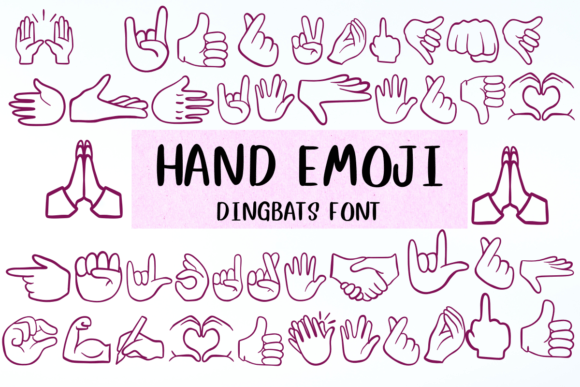
At its core, Hand Emoji is a display font designed to inject personality into any creative project. Unlike a traditional script font or a rigid modern typography choice, this typeface relies on the universal language of body language. Every letter is replaced with a pictorial representation—a thumbs up for an approval, a peace sign for a laid-back vibe, or a high-five for celebration. It is a playful, visual-heavy approach to typography that turns your text into an interactive experience. For anyone working in branding or marketing, this offers a unique opportunity to communicate tone without using adjectives.
Visual Appeal and Project Versatility
The visual appeal of Hand Emoji lies in its ability to be both illustrative and functional. It falls into the category of premium fonts that act as design assets in themselves. When you use a standard font, the typography is the vessel for the message. With this creative font, the typography is the message. This makes it an exceptional tool for specific applications where grabbing attention is the primary goal.
Consider the world of packaging design. If you are selling a product aimed at a younger demographic or something related to social interaction—like a party game, a snack brand, or a lifestyle product—this font can instantly set the mood. It tells the customer that the brand is fun, approachable, and not taking itself too seriously. It is a stark contrast to the cold, corporate feel of a standard business font.
Beyond packaging, the applications are vast:
- Social Media Graphics: In a fast-scrolling environment, static text often gets ignored. Hand Emoji creates a pattern interrupt. It is perfect for Instagram stories, TikTok overlays, or promotional banners where you need to convey excitement or agreement quickly.
- Logo Design: While it might be too complex for a corporate bank, a startup, a cafe, or a creative agency could use this typeface to build a logo that is instantly recognizable and memorable. It pairs well with a clean sans serif font to balance the playfulness.
- Event Invitations and Posters: Whether it is a birthday bash, a community fundraiser, or a music festival, this font sets the tone immediately. It eliminates the need for excessive clip art because the text itself serves as decoration.
- Merchandise: T-shirts, tote bags, and stickers thrive on graphics that communicate an attitude. Using Hand Emoji allows you to spell out words like "LOVE," "PEACE," or "HIGH FIVE" using the actual gestures, which resonates deeply with buyers looking for expressive apparel.
Strategic Typography: Making It Work for Your Brand
While the font is fun, using it effectively requires a strategic approach. As a designer or business owner, you must treat Hand Emoji as a specialty tool rather than a catch-all solution. One of the biggest mistakes in brand identity design is prioritizing style over substance. If your audience cannot read the text, the design has failed.
Therefore, readability is the most critical consideration. Because Hand Emoji replaces letters with intricate hand illustrations, it is not suitable for long blocks of body text. Imagine trying to read a 500-word blog post written entirely in hand gestures; it would be exhausting. Instead, this typeface is best used for headlines, sub-headers, and call-to-action buttons. For the body copy, pair it with a highly legible serif font or a clean sans serif font. This contrast not only ensures the message gets across but also highlights the uniqueness of the headline font.
When matching this typography to your project goals, consider the specific "voice" of the gestures. Does the font include a wide variety of gestures? Does it offer different weights or styles? A high-quality premium font will often include variations that allow you to mix and match. For example, you might use a "fist bump" glyph for a sports brand or a "waving hand" for a welcoming community newsletter. Review the character map of the font thoroughly before purchasing or starting your design to ensure it has the specific visual vocabulary you need.
Integration with Modern Design Trends
In the current landscape of digital design, authenticity is currency. Audiences are tired of overly polished, stock-photo-heavy aesthetics. They crave personality and human connection. Hand Emoji taps directly into this trend. It mimics the casual, human-centric communication style found in text messages and social media comments, bringing that warmth into formal design assets like web design and editorial layouts.
For digital products, such as online courses or downloadable planners, this font can add a layer of delight. Imagine a checklist where the bullet points are thumbs-up icons, or a "completed" status that uses a clapping hand. These small details elevate the user experience, making the product feel more thoughtful and professionally curated.
Furthermore, consider the power of font pairing. To maintain a professional presentation, avoid pairing Hand Emoji with other decorative or handwritten fonts. The visual noise would be too high. Instead, look for a sturdy geometric sans serif or a classic serif typeface. This allows the Hand Emoji to act as the "accent" in your typographic hierarchy, providing the flair while the secondary font handles the heavy lifting of information delivery.
Commercial Considerations and Licensing
If you are a small business owner or a freelancer, the legal side of design assets is just as important as the aesthetic side. When investing in a creative font like Hand Emoji, you must understand the licensing. Most premium fonts come with a distinction between a "desktop license" (for print and logos) and a "web license" (for using the font on your website via CSS).
Before you integrate this typeface into your client work or your own brand, check the End User License Agreement (EULA). Does the license cover merchandise? If you plan to use the font on T-shirts or mugs for sale, you often need an expanded license. Using a font without the proper commercial license can lead to legal headaches down the road, so it is always better to verify terms upfront. Treat your typography selection as a business investment; the right font protects your brand and ensures your marketing assets are legally sound.
Ultimately, Hand Emoji is more than just a novelty. It is a versatile design asset that bridges the gap between text and illustration. Whether you are designing a logo for a new startup, creating a flyer for a local event, or crafting a social media campaign, this typeface offers a way to speak directly to the viewer's emotions. It reminds us that design doesn't always have to be serious—sometimes, a simple thumbs-up is all you need to get the message across.